
Guatemala Population: 16,581,273
NO VISITORS FROM HERE YET!Back to Flag Counter Overview | 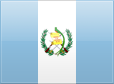 |
| History | |
| The Maya civilization flourished in Guatemala and surrounding regions during the first millennium A.D. After almost three centuries as a Spanish colony, Guatemala won its independence in 1821. During the second half of the 20th century, it experienced a variety of military and civilian governments, as well as a 36-year guerrilla war. In 1996, the government signed a peace agreement formally ending the internal conflict. |

|  |
| |
| Geography | |
| |
| Location: | Central America, bordering the North Pacific Ocean, between El Salvador and Mexico, and bordering the Gulf of Honduras (Caribbean Sea) between Honduras and Belize |
| Geographic coordinates: | 15 30 N, 90 15 W |
| Area: | total: 108,889 sq km land: 107,159 sq km water: 1,730 sq km Size comparison: slightly smaller than Pennsylvania |
| Land Boundaries: | total: 1,667 km border countries (4): Belize 266 km, El Salvador 199 km, Honduras 244 km, Mexico 958 km |
| Coastline: | 400 km |
| Maritime claims: | territorial sea: 12 nm exclusive economic zone: 200 nm continental shelf: 200-m depth or to the depth of exploitation |
| Climate: | tropical; hot, humid in lowlands; cooler in highlands |
| Terrain: | two east-west trending mountain chains divide the country into three regions: the mountainous highlands, the Pacific coast south of mountains, and the vast northern Peten lowlands |
| Natural resources: | petroleum, nickel, rare woods, fish, chicle, hydropower |
| Land use: | agricultural land: 41.2% (2011 est.) arable land: 14.2% (2011 est.) permanent crops: 8.8% (2011 est.) permanent pasture: 18.2% (2011 est.) forest: 33.6% (2011 est.) other: 25.2% (2011 est.) |
| Irrigated land: | 3,375 sq km (2012) |
| Natural hazards: | numerous volcanoes in mountains, with occasional violent earthquakes; Caribbean coast extremely susceptible to hurricanes and other tropical storms volcanism: significant volcanic activity in the Sierra Madre range; Santa Maria (3,772 m) has been deemed a Decade Volcano by the International Association of Volcanology and Chemistry of the Earth's Interior, worthy of study due to its explosive history and close proximity to human populations; Pacaya (2,552 m), which erupted in May 2010 causing an ashfall on Guatemala City and prompting evacuations, is one of the country's most active volcanoes with frequent eruptions since 1965; other historically active volcanoes include Acatenango, Almolonga, Atitlan, Fuego, and Tacana; see note 2 under "Geography - note" |
| Current Environment Issues: | deforestation in the Peten rainforest; soil erosion; water pollution |
| International Environment Agreements: | party to: Antarctic Treaty, Biodiversity, Climate Change, Climate Change-Kyoto Protocol, Desertification, Endangered Species, Environmental Modification, Hazardous Wastes, Law of the Sea, Marine Dumping, Ozone Layer Protection, Ship Pollution, Wetlands, Whaling signed, but not ratified: none of the selected agreements |
| ^Back to Top | |
| People | |
| |
| Nationality: | noun: Guatemalan(s) adjective: Guatemalan |
| Ethnic groups: | mestizo (mixed Amerindian-Spanish - in local Spanish called Ladino) and European 60.1%, Maya 39.3% (K'iche 11.3%, Q'eqchi 7.6%, Kaqchikel 7.4%, Mam 5.5%, other 7.5%), non-Maya, non-mestizo 0.15% (Xinca (indigenous, non-Maya), Garifuna (mixed West and Central African, Island Carib, and Arawak)), other 0.5% (2001 est.) |
| Languages: | Spanish (official) 68.9%, Maya languages 30.9% (K'iche 8.7%, Q'eqchi 7%, Mam 4.6%, Kaqchikel 4.3%, other 6.3%), other 0.3% (includes Xinca and Garifuna) (2001 est.) note: the 2003 Law of National Languages officially recognized 23 indigenous languages, including 21 Maya languages, Xinka, and Garifuna |
| Religions: | Roman Catholic, Protestant, indigenous Maya |
| Population: | 16,581,273 (July 2018 est.) |
| Age structure: | 0-14 years: 34.55% (male 2,919,281 /female 2,810,329) 15-24 years: 20.23% (male 1,688,900 /female 1,665,631) 25-54 years: 35.47% (male 2,878,075 /female 3,002,920) 55-64 years: 5.28% (male 407,592 /female 468,335) 65 years and over: 4.46% (male 336,377 /female 403,833) (2018 est.) |
| Dependency ratios: | total dependency ratio: 68.7 (2015 est.) youth dependency ratio: 61.1 (2015 est.) elderly dependency ratio: 7.6 (2015 est.) potential support ratio: 13.1 (2015 est.) |
| Median age: | total: 22.5 years male: 22 years female: 23.1 years (2018 est.) |
| Population growth rate: | 1.72% (2018 est.) |
| Birth rate: | 24.6 births/1,000 population (2018 est.) |
| Death rate: | 5 deaths/1,000 population (2018 est.) |
| Net migration rate: | -2.4 migrant(s)/1,000 population (2018 est.) |
| Urbanization: | urban population: 51.1% of total population (2018) rate of urbanization: 2.68% annual rate of change (2015-20 est.) |
| Major urban areas - population: | 2.851 million GUATEMALA CITY (capital) (2018) |
| Sex ratio: | at birth: 1.05 male(s)/female 0-14 years: 1.04 male(s)/female 15-24 years: 1.01 male(s)/female 25-54 years: 0.96 male(s)/female 55-64 years: 0.87 male(s)/female 65 years and over: 0.83 male(s)/female total population: 0.99 male(s)/female (2018 est.) Mother's mean age at first birth: 21.2 years (2014/15 est.) note: median age at first birth among women 25-29 |
| Maternal mortality rate: | 88 deaths/100,000 live births (2015 est.) |
| Infant mortality rate: | total: 23.3 deaths/1,000 live births male: 25.6 deaths/1,000 live births female: 20.9 deaths/1,000 live births (2018 est.) |
| Life expectancy at birth: | total population: 71.8 years male: 69.8 years female: 73.9 years (2018 est.) |
| Total fertility rate: | 2.87 children born/woman (2018 est.) |
| Contraceptive prevalence rate: | 60.6% (2014/15) |
| Physicians density: | 0.36 physicians/1,000 population (2018) |
| Hospital bed density: | 0.6 beds/1,000 population (2014) |
| Drinking water source: | improved: urban: 98.4% of population rural: 86.8% of population total: 92.8% of population unimproved: urban: 1.6% of population rural: 13.2% of population total: 7.2% of population (2015 est.) |
| Sanitation facility access: | improved: urban: 77.5% of population (2015 est.) rural: 49.3% of population (2015 est.) total: 63.9% of population (2015 est.) unimproved: urban: 22.5% of population (2015 est.) rural: 50.7% of population (2015 est.) total: 36.1% of population (2015 est.) |
| HIV/AIDS - adult prevalence rate: | 0.4% (2017 est.) |
| HIV/AIDS - people living with HIV/AIDS: | 46,000 (2017 est.) |
| HIV/AIDS - deaths: | 2,000 (2017 est.) |
| Obesity - adult prevalence rate: | 21.2% (2016) |
| Children under the age of 5 years underweight: | 12.4% (2015) |
| Education expenditures: | 2.8% of GDP (2017) |
| Literacy: | definition: age 15 and over can read and write (2015 est.) total population: 81.5% male: 87.4% female: 76.3% (2015 est.) |
| School life expectancy (primary to tertiary education): | total: 11 years male: 11 years female: 11 years (2014) Unemployment, youth ages 15-24: total: 5% male: 3.7% female: 8% (2017 est.) |
| ^Back to Top | |
| Government | |
| |
| Country name: | conventional long form: Republic of Guatemala conventional short form: Guatemala local long form: Republica de Guatemala local short form: Guatemala etymology: the Spanish conquistadors used many native Americans as allies in their conquest of Guatemala; the site of their first capital (established in 1524), a former Maya settlement, was called "Quauhtemallan" by their Nahuatl-speaking Mexican allies, a name that means "land of trees" or "forested land", but which the Spanish pronounced "Guatemala"; the Spanish applied that name to a re founded capital city three years later and eventually it became the name of the country |
| Government type: | presidential republic |
| Capital: | name: Guatemala City geographic coordinates: 14 37 N, 90 31 W time difference: UTC-6 (1 hour behind Washington, DC, during Standard Time) etymology: the Spanish conquistadors used many native Americans as allies in their conquest of Guatemala; the site of their first capital (established in 1524), a former Maya settlement, was called "Quauhtemallan" by their Nahuatl-speaking Mexican allies, a name that means "land of trees" or "forested land", but which the Spanish pronounced "Guatemala"; the Spanish applied that name to a re founded capital city three years later and eventually it became the name of the country |
| Administrative divisions: | 22 departments (departamentos, singular - departamento); Alta Verapaz, Baja Verapaz, Chimaltenango, Chiquimula, El Progreso, Escuintla, Guatemala, Huehuetenango, Izabal, Jalapa, Jutiapa, Peten, Quetzaltenango, Quiche, Retalhuleu, Sacatepequez, San Marcos, Santa Rosa, Solola, Suchitepequez, Totonicapan, Zacapa |
| Independence: | 15 September 1821 (from Spain) |
| National holiday: | Independence Day, 15 September (1821) |
| Constitution: | history: several previous; latest adopted 31 May 1985, effective 14 January 1986; suspended and reinstated in 1994 amendments: proposed by the president of the republic, by agreement of 10 or more deputies of Congress, by the Constitutional Court, or by public petition of at least 5,000 citizens; passage requires at least two-thirds majority vote by the Congress membership and approval by public referendum, referred to as "popular consultation"; constitutional articles such as national sovereignty, the republican form of government, limitations on those seeking the presidency, or presidential tenure cannot be amended; amended 1994 (2018) |
| Legal system: | civil law system; judicial review of legislative acts |
| Suffrage: | 18 years of age; universal; note - active duty members of the armed forces and police by law cannot vote and are restricted to their barracks on election day |
| Executive branch: | chief of state: President Jimmy Ernesto MORALES Cabrera (since 14 January 2016); Vice President Jafeth CABRERA Franco (since 14 January 2016); note - the president is both chief of state and head of government head of government: President Jimmy Ernesto MORALES Cabrera (since 14 January 2016); Vice President Jafeth CABRERA Franco (since 14 January 2016) cabinet: Council of Ministers appointed by the president elections/appointments: president and vice president directly elected on the same ballot by absolute majority popular vote in 2 rounds if needed for a 4-year term (not eligible for consecutive terms); election last held on 16 June 2019 with a runoff on 11 August 2019 (next to be held in June 2023) election results: Alejandro GIAMMATTEI elected president; percent of vote in first round - Sandra TORRES (UNE) 25.54%, Alejandro GIAMMATTEI (VAMOS) 13.95%, Edmond MULET (PHG) 11.21%, Thelma CABRERA (MLP) 10.37%, Roberto ARZU (PAN-PODEMOS) 6.08%; percent of vote in second round - Alejandro GIAMMATTEI (VAMOS) 58%, Sandra TORRES (UNE) 42%; note - the new president will be inaugurated on 14 January 2020 |
| Legislative branch: | description: unicameral Congress of the Republic or Congreso de la Republica (158 seats; 127 members directly elected in multi-seat constituencies in the country's 22 departments by simple majority vote and 31 directly elected in a single nationwide constituency by closed-list, proportional representation vote; members serve 4-year terms); note - two additional seats will be added to the new congress when it is seated in January 2020 elections: last held on 16 June 2019 (next to be held on June 2023) election results: percent of vote by party - NA; seats by party - UNE 53, VAMOS 16, UCN 12, VALOR 9, BIEN 8, FCN-NACION 8, SEMILLA 7, TODOS 7, VIVA 7, CREO 6, PHG 6, VICTORIA 4, Winaq 4, PC 3, PU 3, URNG 3, PAN 2, MLP 1, PODEMOS 1 note: current seats by party as of 1 June 2019 - FCN 37, UNE 32, MR 20, TODOS 17, AC 12, EG 7, UCN 6, CREO 5, LIDER 5, VIVA 4, Convergence 3, PAN 3, PP 2, FUERZA 1, PU 1, URNG 1, Winaq 1, independent 1; composition - men 136, women 22, percent of women 13.9% |
| Judicial branch: | highest courts: Supreme Court of Justice or Corte Suprema de Justicia (consists of 13 magistrates, including the court president and organized into 3 chambers); note - the court president also supervises trial judges countrywide; Constitutional Court or Corte de Constitucionalidad (consists of 5 titular magistrates and 5 substitute magistrates) judge selection and term of office: Supreme Court magistrates elected by the Congress of the Republic from candidates proposed by the Postulation Committee, an independent body of deans of the country's university law schools, representatives of the country's law associations, and representatives of the Courts of Appeal; magistrates elected for concurrent, renewable 5-year terms; Constitutional Court judges - 1 elected by the Congress of the Republic, 1 by the Supreme Court, 1 by the president of the republic, 1 by the (public) University of San Carlos, and 1 by the Assembly of the College of Attorneys and Notaries; judges elected for renewable, consecutive 5-year terms; the presidency of the court rotates among the magistrates for a single 1-year term subordinate courts: numerous first instance and appellate courts |
| Political parties and leaders: | Bienestar Nacional or BIEN [Alfonso PORTILLO and Evelyn MORATAYA] Citizen Alliance or AC Citizen Prosperity or PC [Dami Anita Elizabeth KRISTENSON Sales] Commitment, Renewal, and Order or CREO [Roberto GONZALEZ Diaz-Duran] Convergence [Sandra MORAN] Encounter for Guatemala or EG [Nineth MONTENEGRO Cottom] Everyone Together for Guatemala or TODOS [Felipe ALEJOS] Force or FUERZA [Mauricio RADFORD] Guatemalan National Revolutionary Unity or URNG-MAIZ or URNG [Gregorio CHAY Laynez] Humanist Party of Guatemala or PHG [Edmond MULET] Movement for the Liberation of Peoples or MLP [Thelma CABRERA] Movimiento Semilla or SEMILLA [Thelma ALDANA] National Advancement Party or PAN [Harald JOHANNESSEN] National Convergence Front or FCN-NACION or FCN [Jimmy MORALES] National Unity for Hope or UNE [Sandra TORRES] Nationalist Change Union or UCN [Mario ESTRADA] Patriotic Party or PP PODEMOS [Jose Raul VIRGIL Arias] Political Movement Winaq or Winaq [Sonia GUTIERREZ Raguay] Reform Movement or MR Renewed Democratic Liberty or LIDER (dissolved mid-February 2016) TODOS [Felipe ALEJOS] Unionista Party or PU [Alvaro ARZU Escobar] Value or VALOR [Zury RIOS] Vamos por una Guatemala Diferente or VAMOS [Alejandro GIAMMATTEI] Victory or VICTORIA [Amilcar RIVERA] Vision with Values or VIVA [Armando Damian CASTILLO Alvarado] note: parties represented in the last election, but have since dissolved - FCN (2017), LIDER (2016), and PP (2017) |
| International organization participation: | BCIE, CACM, CD, CELAC, EITI (compliant country), FAO, G-24, G-77, IADB, IAEA, IBRD, ICAO, ICC (national committees), ICCt (signatory), ICRM, IDA, IFAD, IFC, IFRCS, IHO, ILO, IMF, IMO, Interpol, IOC, IOM, IPU, ISO (correspondent), ITSO, ITU, ITUC (NGOs), LAES, LAIA (observer), MIGA, MINUSTAH, MONUSCO, NAM, OAS, OPANAL, OPCW, Pacific Alliance (observer), PCA, Petrocaribe, SICA, UN, UNCTAD, UNESCO, UNIDO, UNIFIL, Union Latina, UNISFA, UNITAR, UNMISS, UNOCI, UNWTO, UPU, WCO, WFTU (NGOs), WHO, WIPO, WMO, WTO |
| National symbol(s): | quetzal (bird); national colors: blue, white |
| National anthem: | name: "Himno Nacional de Guatemala" (National Anthem of Guatemala) lyrics/music: Jose Joaquin PALMA/Rafael Alvarez OVALLE note: adopted 1897, modified lyrics adopted 1934; Cuban poet Jose Joaquin PALMA anonymously submitted lyrics to a public contest calling for a national anthem; his authorship was not discovered until 1911 |
| Diplomatic representation in the US: | chief of mission: Ambassador Manuel Alfredo ESPINA Pinto (since 8 September 2017) chancery: 2220 R Street NW, Washington, DC 20008 telephone: [1] (202) 745-4952 FAX: [1] (202) 745-1908 consulate(s) general: Atlanta, Chicago, Del Rio (TX), Denver, Houston, Los Angeles, McAllen (TX), Miami, New York, Oklahoma City, Philadelphia, Phoenix, Providence (RI), Raleigh (NC), San Bernardino (CA), San Francisco, Seattle consulate(s): Lake Worth (FL), Tucson (AZ) |
| Diplomatic representation from the US: | chief of mission: Ambassador Luis E. ARREAGA (since 4 October 2017) embassy: 7-01 Avenida Reforma, Zone 10, Guatemala City mailing address: DPO AA 34024 telephone: [502] 2326-4000 FAX: [502] 2326-4654 |
| ^Back to Top | |
| Economy | |
Guatemala is the most populous country in Central America with a GDP per capita roughly half the average for Latin America and the Caribbean. The agricultural sector accounts for 13.5% of GDP and 31% of the labor force; key agricultural exports include sugar, coffee, bananas, and vegetables. Guatemala is the top remittance recipient in Central America as a result of Guatemala's large expatriate community in the US. These inflows are a primary source of foreign income, equivalent to two-thirds of the country's exports and about a tenth of its GDP. The 1996 peace accords, which ended 36 years of civil war, removed a major obstacle to foreign investment, and Guatemala has since pursued important reforms and macroeconomic stabilization. The Dominican Republic-Central America Free Trade Agreement (CAFTA-DR) entered into force in July 2006, spurring increased investment and diversification of exports, with the largest increases in ethanol and non-traditional agricultural exports. While CAFTA-DR has helped improve the investment climate, concerns over security, the lack of skilled workers, and poor infrastructure continue to hamper foreign direct investment. The distribution of income remains highly unequal with the richest 20% of the population accounting for more than 51% of Guatemala's overall consumption. More than half of the population is below the national poverty line, and 23% of the population lives in extreme poverty. Poverty among indigenous groups, which make up more than 40% of the population, averages 79%, with 40% of the indigenous population living in extreme poverty. Nearly one-half of Guatemala's children under age five are chronically malnourished, one of the highest malnutrition rates in the world. | |
| GDP (purchasing power parity): | $138.1 billion (2017 est.) $134.4 billion (2016 est.) $130.4 billion (2015 est.) note: data are in 2017 dollars |
| GDP (official exchange rate): | $75.62 billion (2017 est.) |
| GDP - real growth rate: | 2.8% (2017 est.) 3.1% (2016 est.) 4.1% (2015 est.) |
| GDP - per capita (PPP): | $8,200 (2017 est.) $8,100 (2016 est.) $8,000 (2015 est.) note: data are in 2017 dollars |
| Gross national saving: | 13.6% of GDP (2017 est.) 14.4% of GDP (2016 est.) 13.5% of GDP (2015 est.) GDP - composition, by end use: household consumption: 86.3% (2017 est.) government consumption: 9.7% (2017 est.) investment in fixed capital: 12.3% (2017 est.) investment in inventories: -0.2% (2017 est.) exports of goods and services: 18.8% (2017 est.) imports of goods and services: -26.9% (2017 est.) GDP - composition, by sector of origin: agriculture: 13.3% (2017 est.) industry: 23.4% (2017 est.) services: 63.2% (2017 est.) |
| Agriculture - products: | sugarcane, corn, bananas, coffee, beans, cardamom; cattle, sheep, pigs, chickens |
| Industries: | sugar, textiles and clothing, furniture, chemicals, petroleum, metals, rubber, tourism |
| Industrial production growth rate: | 1.8% (2017 est.) |
| Labor force: | 6.664 million (2017 est.) |
| Labor force - by occupation: | agriculture: 31.4% industry: 12.8% services: 55.8% (2017 est.) |
| Unemployment rate: | 2.3% (2017 est.) 2.4% (2016 est.) |
| Population below poverty line: | 59.3% (2014 est.) |
| Household income or consumption by percentage share: | lowest 10%: 1.6% highest 10%: 38.4% (2014) |
| Distribution of family income - Gini index: | 53 (2014 est.) 56 (2011) |
| Budget: | revenues: 8.164 billion (2017 est.) expenditures: 9.156 billion (2017 est.) |
| Taxes and other revenues: | 10.8% (of GDP) (2017 est.) Budget surplus (+) or deficit (-): -1.3% (of GDP) (2017 est.) |
| Public debt: | 24.7% of GDP (2017 est.) 24.5% of GDP (2016 est.) |
| Fiscal year: | calendar year |
| Inflation rate (consumer prices): | 4.4% (2017 est.) 4.4% (2016 est.) |
| Current account balance: | $1.134 billion (2017 est.) $1.023 billion (2016 est.) |
| Exports: | $11.12 billion (2017 est.) $10.58 billion (2016 est.) |
| Exports - commodities: | sugar, coffee, petroleum, apparel, bananas, fruits and vegetables, cardamom, manufacturing products, precious stones and metals, electricity |
| Exports - partners: | US 33.8%, El Salvador 11.1%, Honduras 8.8%, Nicaragua 5.1%, Mexico 4.7% (2017) |
| Imports: | $17.11 billion (2017 est.) $15.77 billion (2016 est.) |
| Imports - commodities: | fuels, machinery and transport equipment, construction materials, grain, fertilizers, electricity, mineral products, chemical products, plastic materials and products |
| Imports - partners: | US 39.8%, China 10.7%, Mexico 10.7%, El Salvador 5.3% (2017) |
| Reserves of foreign exchange and gold: | $11.77 billion (31 December 2017 est.) $9.156 billion (31 December 2016 est.) |
| Debt - external: | $22.92 billion (31 December 2017 est.) $21.45 billion (31 December 2016 est.) |
| Stock of direct foreign investment - at home: | $16.2 billion (2017 est.) $14.6 billion (2016 est.) |
| Market value of publicly traded shares: | n/a |
| Exchange rates: | quetzales (GTQ) per US dollar - 7.323 (2017 est.) 7.5999 (2016 est.) 7.5999 (2015 est.) 7.6548 (2014 est.) 7.7322 (2013 est.) |
| ^Back to Top | |
| Energy | |
| |
| Electricity - production: | 12.12 billion kWh (2016 est.) |
| Electricity - consumption: | 10.1 billion kWh (2016 est.) |
| Electricity - exports: | 1.858 billion kWh (2017 est.) |
| Electricity - imports: | 747 million kWh (2016 est.) |
| Electricity - installed generating capacity: | 4.605 million kW (2016 est.) |
| Electricity - from fossil fuels: | 41% of total installed capacity (2016 est.) |
| Electricity - from nuclear fuels: | 0% of total installed capacity (2017 est.) |
| Electricity - from hydroelectric plants: | 31% of total installed capacity (2017 est.) |
| Electricity - from other renewable sources: | 28% of total installed capacity (2017 est.) |
| Crude oil - production: | 9,666 bbl/day (2017 est.) |
| Crude oil - exports: | 9,383 bbl/day (2017 est.) |
| Crude oil - imports: | 0 bbl/day (2015 est.) |
| Crude oil - proved reserves: | 83.07 million bbl (1 January 2018 est.) |
| Refined petroleum products - production: | 1,162 bbl/day (2015 est.) |
| Refined petroleum products - consumption: | 89,000 bbl/day (2016 est.) |
| Refined petroleum products - exports: | 10,810 bbl/day (2015 est.) |
| Refined petroleum products - imports: | 97,900 bbl/day (2015 est.) |
| Natural gas - production: | 0 cu m (2017 est.) |
| Natural gas - consumption: | 0 cu m (2017 est.) |
| Natural gas - exports: | 0 cu m (2017 est.) |
| Natural gas - imports: | 0 cu m (2017 est.) |
| Natural gas - proved reserves: | 2.96 billion cu m (1 January 2006 est.) |
| Carbon dioxide emissions from consumption of energy: | 17.15 million Mt (2017 est.) |
| ^Back to Top | |
| Communications | |
| |
| Cellular Phones in use: | total subscriptions: 19,986,482 subscriptions per 100 inhabitants: 129 (2017 est.) |
| Telephone system: | general assessment: fairly modern network centered in the city of Guatemala; one of the lowest teledensities in the region especially in the country; state-owned telecommunications company privatized in the late 1990s opened the way for competition; steady improvement of fixed-line which has also spurred growth in mobile-cellular and broadband; open regulatory framework coupled with competion and greater disposable household revenue spurs growth (2018) domestic: fixed-line teledensity roughly 15 per 100 persons; fixed-line investments are being concentrated on improving rural connectivity; mobile-cellular teledensity about 129 per 100 persons (2018) international: country code - 502; landing point for both the Americas Region Caribbean Ring System (ARCOS-1) and the SAM-1 fiber-optic submarine cable system that, together, provide connectivity to South and Central America, parts of the Caribbean, and the US; connected to Central American Microwave System; satellite earth station - 1 Intelsat (Atlantic Ocean) |
| Broadcast media: | 4 privately owned national terrestrial TV channels dominate TV broadcasting; multi-channel satellite and cable services are available; 1 government-owned radio station and hundreds of privately owned radio stations (2019) |
| Internet country code: | .gt |
| Internet users: | total: 5,241,952 percent of population: 34.5% (July 2016 est.) |
| ^Back to Top | |
| Transportation | |
| |
| Airports: | 291 (2013) |
| Airports (paved runways): | total 16 (2017) 2,438 to 3,047 m: 2 (2017) 1,524 to 2,437 m: 4 (2017) 914 to 1,523 m: 6 (2017) under 914 m: 4 (2017) |
| Airports (unpaved runways): | total 275 (2013) 2,438 to 3,047 m: 1 (2013) 1,524 to 2,437 m: 2 (2013) 914 to 1,523 m: 77 (2013) under 914 m: 195 (2013) |
| Heliports: | 1 (2013) |
| Pipelines: | 480 km oil (2013) |
| Railways: | total 800 km (2018) narrow gauge: 800 km 0.914-m gauge (2018) note: despite the existence of a railway network, all rail service was suspended in 2007 and no passenger or freight train currently runs in the country (2018) |
| Roadways: | total 17,621 km (2016) paved: 7,489 km (2016) unpaved: 10,132 km (includes 4,960 km of rural roads) (2016) |
| Waterways: | 990 km (260 km navigable year round; additional 730 km navigable during high-water season) (2012) |
| Merchant marine: | total 9 by type: oil tanker 1, other 8 (2018) |
| Ports and terminals: | major seaport(s): Puerto Quetzal, Santo Tomas de Castilla |
| ^Back to Top | |
| Military | |
| |
| Military branches: | National Army of Guatemala (Ejercito Nacional de Guatemala, ENG, includes Guatemalan Navy (Fuerza de Mar, including Marines) and Guatemalan Air Force (Fuerza Aerea Guatemalteca, FAG)) (2013) |
| Military service age and obligation: | all male citizens between the ages of 18 and 50 are eligible for military service; in practice, most of the force is volunteer, however, a selective draft system is employed, resulting in a small portion of 17-21 year-olds conscripted; conscript service obligation varies from 1 to 2 years; women can serve as officers (2013) |
| Military expenditures: | 0.37% of GDP (2017) 0.39% of GDP (2016) 0.43% of GDP (2015) 0.45% of GDP (2014) 0.46% of GDP (2013) |
| ^Back to Top | |
| Transnational Issues | |
| |
| Disputes - International: | annual ministerial meetings under the Organization of American States-initiated Agreement on the Framework for Negotiations and Confidence Building Measures continue to address Guatemalan land and maritime claims in Belize and the Caribbean Sea; Guatemala persists in its territorial claim to half of Belize, but agrees to Line of Adjacency to keep Guatemalan squatters out of Belize's forested interior; both countries agreed in April 2012 to hold simultaneous referenda, scheduled for 6 October 2013, to decide whether to refer the dispute to the ICJ for binding resolution, but this vote was suspended indefinitely; Mexico must deal with thousands of impoverished Guatemalans and other Central Americans who cross the porous border looking for work in Mexico and the US |
| Refugees and internally displaced persons: | IDPs: 242,000 (more than three decades of internal conflict that ended in 1996 displaced mainly the indigenous Maya population and rural peasants; ongoing drug cartel and gang violence) (2018) |
| Illicit drugs: | major transit country for cocaine and heroin; it is estimated that 1,000 mt of cocaine are smuggled through the country each year, primarily destined for the US market; in 2016, the Guatamalan government estimated that an average of 4,500 hectares of opium poppy were being cultivated; marijuana cultivation for mostly domestic consumption; proximity to Mexico makes Guatemala a major staging area for drugs (particularly for cocaine); money laundering is a serious problem; corruption is a major problem |
| ^Back to Top | |
Back to Flag Counter Overview
Source: CIA - The World Factbook